THE PHONE Solo vs Party Playstyles
Choose the right stack size for THE PHONE—solo, duo, mid-stack, or full 18—without pretending every lobby is equal.
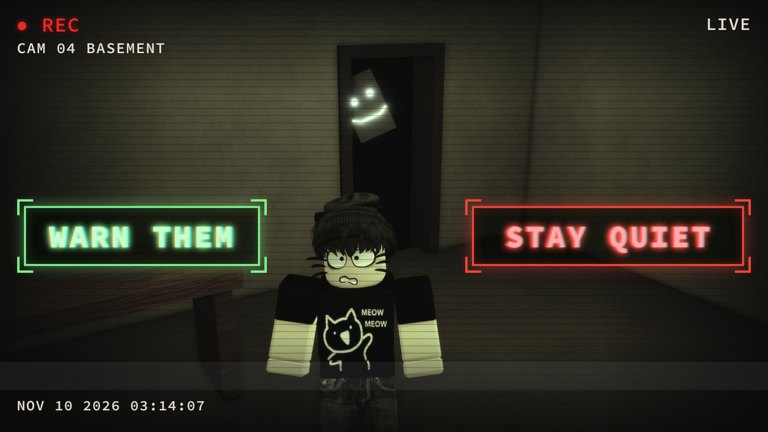
THE PHONE sells an eighteen-player fantasy, but most learning nights are not a perfect full lobby of coordinated friends. Zynapse Studio’s Roblox survival horror party game supports everything from awkward solos in public Hellfire rooms to disciplined duos and chaotic max parties. This page compares solo / duo versus full 18 play: communication load, who answers, risk profiles, and when to favor private servers. Use it beside Teamwork Tips and the difficulty language on Call Challenges.
The real question is variance, not “which is correct”
There is no moral ranking that says full 18 is always better. There is only match between your goals and your stack size:
| Goal | Better fit |
|---|---|
| Learn Interact and audio cues | Solo practice in quiet moments, or duo private |
| Practice callouts | Duo–trio |
| Stable Hellfire clears | Core of 4–8 inside larger servers |
| Chaos content / reactions | Public full lobbies |
| Serious role drills | Private server with invited friends |
After ~1.19M visits and busy concurrent play, public rooms default toward chaos. Choose intentionally.
Solo queue: honest risk profile
Pros: Flexible schedule, no friend coordination tax, raw exposure to random meta.
Cons: You may become the default answerer by silence, callouts evaporate, blame focuses on whoever touched the phone, and Hellfire publics can feel like performing without a safety net.
Solo survival rules
- Mute toxicity early—protect your focus.
- Self-nominate sparingly; say “I can backup” if you are not ready to main answer.
- Keep Controls sharp so your rare answer attempts land.
- Treat each public night as scouting for future friends, not as a ranked ladder.
- Leave lobbies that exist only to grief the answerer.
Solo players should still read How to Survive Calls—mechanics matter more when nobody else covers your mistakes.
Duo and trio: the classroom size
Two or three coordinated players can carry disproportionate value inside a larger server:
- One answers, one shotcalls, one spotlights (trio), or answerer + shotcaller (duo).
- Text + voice redundancy if one player is on mobile (Mobile & PC Tips).
- Shared codes redeem before rings (Codes).
- Shared decision to stay or leave toxic publics.
Duos are the fastest way to install the culture described in Teamwork Tips without herding fifteen strangers.
Mid-stack (four to eight): the Hellfire sweet spot
A mid-stack is large enough to cover roles and small enough to keep voice discipline. Drop this core into a public Hellfire lobby when you want seasonal energy without surrendering structure. Re-brief roles whenever randoms drown the channel. Event context: Hellfire Event and November 20 UPD.
Full 18: communication load spikes hard
At max party fantasy:
- Unrestricted voice becomes noise.
- Multiple people may dive for the phone.
- Shotcalling must be ruthlessly short.
- Pathing collisions rise.
- Social blame has a larger audience.
Who answers should be pre-declared, not crowd-sourced in the moment. Backup must exist. Morale leads matter. If your group cannot name roles, you do not have a full-18 strategy—you have a crowd. Re-read the role chart on Teamwork Tips before forcing a max lobby “because the game allows 18.”
Full-18 risk profile
High entertainment, high variance. Great for creators who disclose chaos. Poor for teaching absolute beginners unless a mid-stack core is already steady. Challenge vibes that feel S-tier socially are documented on Call Challenges—full lobbies manufacture that feeling even on simpler twists.
Who should answer across stack sizes
| Stack | Recommended answer pattern |
|---|---|
| Solo | Answer only when ready; otherwise explicit “can’t” so someone else can |
| Duo | Alternate rings; never both freeze |
| Mid-stack | Primary + backup rotation (Pro Tips) |
| Full 18 | Named primary/backup announced in text and voice; randoms may ignore you—model anyway |
Never use the newest player as perpetual sacrifice content. Consent beats clips.
When to favor private servers
Choose private (or tight friends-only) when you need:
- Onboarding after Getting Started.
- Control drills post-patch.
- Script-free learning environments (still avoid unauthorized tools—Scripts Hub).
- Content experiments that would ruin public learners.
- Tilt recovery after a poisonous Hellfire public.
Return to public when your goal is population energy, seasonal vibes, or recruiting. Private is a tool, not a forever hiding place—unless your group simply prefers it.
Communication load model (keep this mental math)
- Solo: You manage 100% of your information; lobby gives unreliable extras.
- Duo: Communication load is shared; failure is usually missed handoff.
- Mid-stack: Load is specialized; failure is role drift.
- Full 18: Load must be reduced on purpose; failure is too many speakers.
Advanced stacks win full lobbies by talking less at the wrong time—not more.
Decision flow for tonight
- What is the goal—learn, clear, or clip?
- How many trusted players are online?
- Is Hellfire public density worth the variance?
- Do we need a private warm-up first?
- Who answers ring one?
If you cannot answer step five, you are not ready for a serious full party.
Bridging pages
- Social OS: Teamwork Tips
- Mechanical spine: How to Survive Calls
- Device fit: Mobile & PC Tips
- Advanced habits: Pro Tips
- Seasonal pressure: Hellfire Event
- Hub: Players Hub
Play solo to learn your hands. Play duo to learn your words. Play mid-stack to learn your system. Play full 18 when that system can survive strangers. THE PHONE will ring either way—pick the party size that matches the night you actually want.
Frequently Asked Questions
Quick answers to the most common questions.
Can I enjoy THE PHONE solo?
Yes, but expect higher variance and more pressure to answer. Mute toxicity, keep controls sharp, and treat publics as optional stress tests.
What stack size is best for learning?
Duo or trio in a private or friends lobby. Add public Hellfire after callouts feel natural.
When should we use a full 18-player party?
When you have a mid-stack core, named answerer roles, and a goal that accepts chaos—entertainment or stress testing—not first-hour onboarding.
When are private servers worth it?
Onboarding, post-update control checks, tilt recovery, and any session where public grief would ruin learning.
Where do teamwork roles fit in?
Use Teamwork Tips for the full role chart and callout scripts, then scale those roles up or down with this solo-vs-party guide.